

What colleges are really looking for . . .
Applying to college today is about more than grades and test scores. Admissions offices are looking for students who demonstrate purpose, initiative, and impact. In other words, they want to see a clear inner purpose story.
Your purpose story is the story colleges understand about you:
What you care about
What you contribute
How you lead or solve problems
The good news? With the help of AI tools, students can strategically shape their story and opportunities earlier and more effectively than ever before.
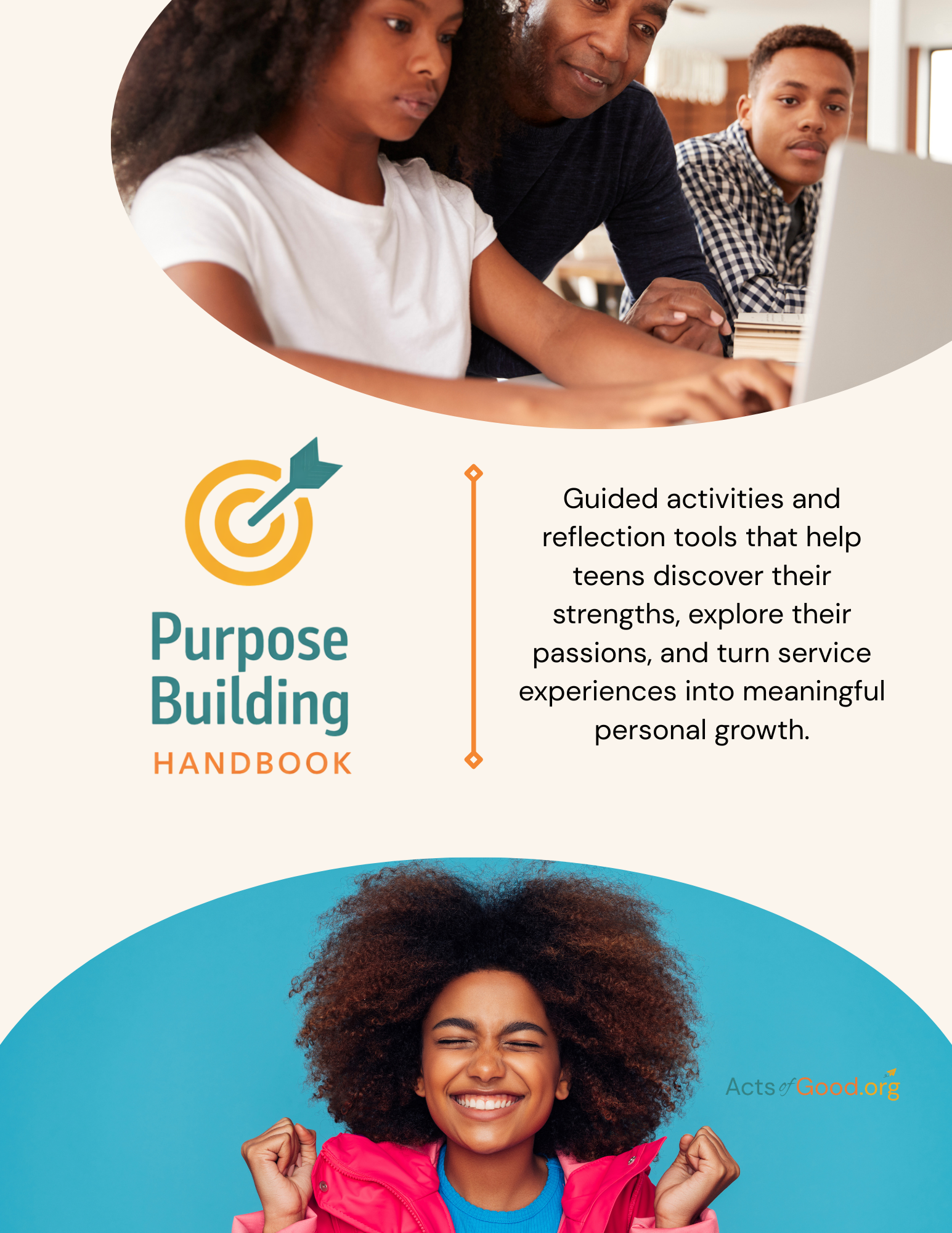
Here is a step-by-step guide to building a competitive student purpose story.
Help your teen move beyond activities and start building a meaningful direction. The Purpose Building Checklist guides students through simple reflections and actions that help them identify their strengths, interests, and values. As teens explore what matters to them, they begin connecting their passions to service, leadership, and real-world impact—creating experiences that strengthen both personal growth and future college opportunities.
Step 1: Identify Your Core Interests and Strengths
A strong student purpose story begins with self-awareness. Colleges are less impressed by students who try to do everything and more interested in students who show depth in something meaningful.
Students should reflect on questions like:
What problems in the world do I care about?
What subjects energize me?
What activities make me lose track of time?
What skills come naturally to me?
How AI Can Help
Students can prompt AI with questions like:
“Based on these interests and activities, what career fields might align with my strengths?”
AI can help identify themes and connections students might not see themselves.
Step 2: Choose a Focus Area (Your Impact Theme)
Competitive applicants often develop a focus area or impact theme over time. This doesn’t mean locking into a career at age 16. It simply means demonstrating curiosity and contribution around a topic.
Examples of student impact themes:
Environmental sustainability
Mental health advocacy
Education equity
Community service
Technology innovation
Public health
Admissions officers often look for what some counselors call a “spike”—a clear area where a student shows leadership or commitment.
How AI Can Help
Students can ask:
“What types of high school projects or volunteer opportunities would align with an interest in environmental science?”
AI can suggest:
research ideas
volunteer opportunities
community projects
competitions
Step 3: Build Meaningful Experiences
Once students identify a focus area, they should begin building experiences that demonstrate initiative.
These might include:
Starting a service project
Creating a club or organization
Conducting independent research
Launching a small nonprofit effort
Interning with a local organization
Leading a community initiative
For example, a student interested in education might start a peer tutoring program for younger students.
How AI Can Help
Students can ask AI:
“Generate 10 community service project ideas for a high school student interested in public health.”
AI can help brainstorm projects that demonstrate leadership and impact.
Step 4: Document Achievements and Growth
Students should track their accomplishments and experiences as they happen.
This includes:
volunteer hours
leadership roles
awards
projects completed
impact metrics (people served, funds raised, etc.)
Keeping this information organized will make college applications and scholarship applications much easier later.
How AI Can Help
Students can ask AI to help create:
activity resumes
leadership portfolios
scholarship trackers
achievement summaries
Example prompt:
“Help me turn these volunteer experiences into strong resume bullet points for college applications.”
Step 5: Develop a Digital Footprint
Today’s students should think about how their online presence reflects their interests and leadership.
Some students create:
personal websites
blogs
project portfolios
social media pages focused on their initiatives
These platforms allow students to showcase their work and tell their story.
For example, a student passionate about science might publish short articles explaining experiments or research topics.
How AI Can Help
AI can assist with:
writing blog posts
editing student writing
brainstorming content ideas
improving clarity and structure
Example prompt:
“Help me turn my community tutoring project into a blog post explaining the impact and what I learned.”
Step 6: Identify Scholarships and Opportunities
Students who build strong brands early often become competitive candidates for scholarships and leadership programs.
Some well-known national programs include:
Coca-Cola Scholars Foundation
Jack Kent Cooke Foundation
Ronald McDonald House Charities
How AI Can Help
Students can ask:
“Find scholarships for students interested in community leadership and education.”
AI can also help generate search phrases and create a scholarship tracking system.
Step 7: Craft Your Personal Narrative
Ultimately, the goal of building a student brand is to create a cohesive story that admissions officers can easily understand.
Strong narratives often answer three questions:
What do you care about?
What actions have you taken?
What impact have you created?
Colleges want students who are curious, motivated, and committed to making a difference.
How AI Can Help
Students can use AI to:
brainstorm essay topics
outline personal statements
edit drafts
strengthen storytelling
Example prompt:
“Help me outline a college essay about how starting a tutoring program changed my view of leadership.”
Final Thoughts
A competitive college applicant is not someone who simply checks boxes.
The strongest students:
pursue meaningful interests
take initiative
create impact in their communities
reflect on their growth
AI tools can help students think strategically, stay organized, and expand their ideas, but the most important ingredient is still authentic passion and commitment.
When students combine purpose with action, they build a brand that colleges—and communities—value.
